CM Culture Displays
Meridian Theory
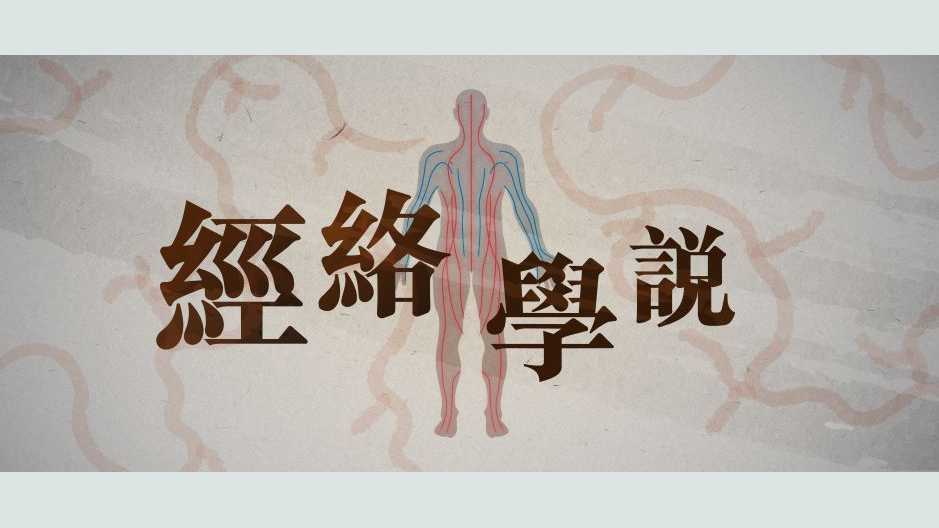
Meridian theory is the study of the distribution and pathways, physiological functions, and pathological changes of the body’s meridian system, as well as its interrelationships with the zang-fu organs, physical structures, sensory orifices, qi, blood, and body fluids. It is an essential component of the traditional Chinese medicine (TCM) theoretical system.
The meridian system is composed of jing mai (meridians) and luo mai (collaterals). The meridians include the twelve meridians and the eight extraordinary meridians, as well as the twelve divergent meridians, twelve muscle regions, and twelve cutaneous regions that are affiliated with the twelve meridians. The collaterals include the fifteen collaterals, as well as floating collaterals and minute collaterals.
The twelve meridians, also known as the twelve regular meridians, comprise the three yang meridians of hand, three yin meridians of hand, three yang meridians of foot, and three yin meridians of foot. These meridians each correspond to specific zang-fu organs within the body and are responsible for the circulation of qi and blood and the regulation of physiological functions. The eight extraordinary meridians are special meridians that run along separate pathways beyond the twelve regular meridians, including the Du meridian, Ren meridian, Chong meridian, Dai meridian, Yinwei meridian, Yangwei meridian, Yinqiao meridian, and Yangqiao meridian. They serve the functions of regulating the qi and blood of the twelve regular meridians, storing essence and qi, and maintaining the balance of yin and yang in the body.
The collaterals are branches of the meridians, classified into fu luo (floating collaterals), bie luo (divergent collaterals), and sun luo (minute collaterals). Floating collaterals are located on the body’s surface; divergent collaterals connect the meridians to the zang-fu organs; and minute collaterals are the finest branches of the collateral network.
Floating collaterals refer to the superficial collaterals located beneath the skin. They are so named because of their superficial, “floating” location. The divergent collaterals are the collective term for the branches that diverge from the twelve meridians, the Ren and Du meridians, and the great collateral of the spleen, also known as the “fifteen collaterals”.
Minute collaterals are even finer vessels that branch off from the divergent collaterals and are distributed throughout the entire body in vast, innumerable quantities. The minute collaterals converge with the three hundred and sixty-five acupoints, hence the expression “the minute collaterals converge at the three hundred and sixty-five acupoints”.
The above translation was supervised by Prof. Janice PAN. The content was translated by Ms. Janet YU, and edited by Prof. Janice PAN and Dr. Robert TSATURYAN, with Mr. Sing Leung CHAN, Chinese Medicine Practitioner, serving as consultant.